

A featured contribution from Leadership Perspectives: a curated forum reserved for leaders nominated by our subscribers and vetted by the Construction Tech Review Advisory Board.

NTT Data Services
Precision Medicine and Real-World Data: Don't Let Shiny Objects Distract From the Core Issue of Integration
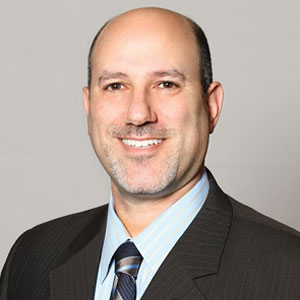
Adam Nelson
Two transformational waves in the quest for better and more insightful information and deeper engagement are data from the Internet of Things (IoT) and digital technology. The number of connected devices that could be useful in life sciences is expanding rapidly, and the data from those devices could revolutionize many aspects of drug development and marketing, accelerating research and development while also lowering the costs of gathering accurate patient data. And there’s some interesting and innovative IoT technology to use.
But for pharmas and other life sciences organizations, the challenge in adopting IoT devices is not necessarily with having things that work for the objective and work easily for the participant, but in the data the devices collect. The key issue isn’t the sensors or devices, but rather how to effectively integrate the resultant data in a way that helps meets business goals.
The key issue is creating architecture to ensure the usability of the data and business processes to make sure you are collecting the data you really need and that you are using the data effectively. Finding the right devices, given differences in protocols during trial versus post-care therapy or rehabilitation is a challenge, yet one, manufacturers should solve as they bring products to market.
Given the complexity of integrating real-world patient data, the first step is to identify and clearly define goals. Do you need real-world data for patient stratification? Or do you need to prove efficacy? The two are similar yet have very different requirements for sharing, presenting, and analyzing. With a well-defined goal, you can evaluate your current capabilities and the technical requirements for integrating the data.
The Key Issue Is How To Effectively Integrate Data In A Way That Helps Meets Business Goals
And you can set up the right processes to ensure you use the data efficiently while maintaining regulatory compliance when and where required.
Lack of standards can rapidly lead to chaos
Another difficulty with IoT is the lack of standards. There are many different software platforms and systems being brought to market and most are specialized, solving a few issues in the ecosystem. They are as focused in their intent as precision medicine. The advantage to this is they solve the issue really well, but the challenge is the life sciences buyer ends up with a multitude of specialty systems, all requiring integration.
The SaaS and PaaS models individually require cost-effective budget for support, maintenance, and upgrade. Yet capturing and integrating all the data between the systems requires an entirely new layer, one which must be architected, developed, and maintained.
Wireless enabled devices, such as scales and blood pressure monitors, which require action by the patient to acquire data have been the quickest products to market, because they take an existing device and add digital communication capabilities. In time, wearables will probably be the product family that transforms clinical trials and efficacy monitoring most significantly. With the ability to capture information without the participant even realizing it is being done, you can expect more accurate information and more adherence to trial parameters, which leads to the ability to learn faster, make conclusions quicker, and lower the overall cost of drug discovery and product launch.
Real-world evidence to support the value of therapies
For patient medication adherence, real-world evidence is important to ensure drug efficacy and also for showing payers that medication outcomes are performing as trialed. Increasingly, payers are seeking contracts that set goals for efficacy, and patient adherence becomes critical to financial performance. Real-time patient feedback can help alert caregivers to adherence issues, allowing them to quickly offer support and keep the patient working toward better outcomes.
And how better to collect real-world evidence than through wearables and digital technology, including smart phones, smart homes and connected vehicles and offices?
This, however, comes at a price – consumer expectations applied to scientific and business use. We purchase a new smart phone and expect it to simply work. The same now holds true of a thermostat or connected car device and app that controls your teenager’s driving patterns. It is in this expectation of simplicity that the life sciences industry will see distraction.
The expectation and the distraction will be to collect data from wearables, mobile, and digital enabled devices in real-time, and once collected, present that data in a visual format that enables business insights and decision making in real time. However, the insights are derived from an ecosystem, not a set of devices or a specialty platform, thus an integrated view is required. Because our expectations for how digital technology should work have been set by our experience with consumer digital products, users will expect that same level of speed and simplicity in the more complex world of business and science.
To avoid the distraction and take full advantage of the enormous value IoT and digital technology offers, it makes sense to find a really good systems integration partner. The integration team can then focus on meeting the speed and simplicity expectations of users and creating a solid, future-looking foundation. That will leave you free to focus on the data and how to use it. The last thing you want to do is to get so bogged down in the details that you miss the opportunity that IoT and digital technology offers.
